
At the citizenship ceremony, you pledge that you will share Australia’s democratic beliefs and respect its rights and liberties. It is very important that you understand Australia’s democratic beliefs, and the rights and liberties shared by Australians.
This part of the booklet lists these beliefs, rights and liberties. For more information see Part 4, Australian values.
Our democratic beliefs
Parliamentary democracy
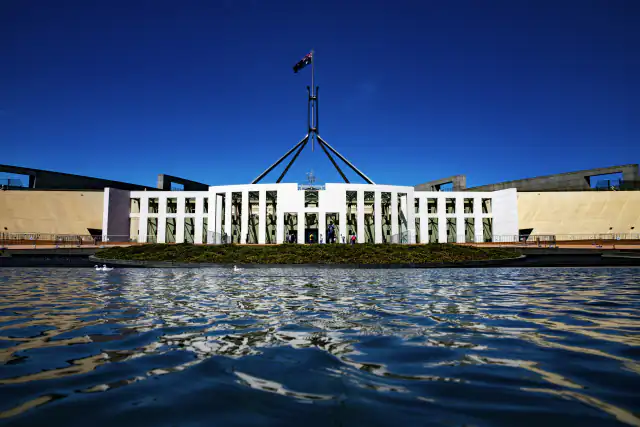
Australia’s system of government is a parliamentary democracy. As part of this system, the power of the government comes from the Australian people because Australian citizens vote for people to represent them in parliament. The representatives in parliament must answer to the people, through elections, for the decisions they make.
The Rule of Law
All Australians are equal under the law. The Rule of Law means that no person, group or religious rule is above the law. Everyone, including people who hold positions of power in the Australian community, must obey Australia’s laws. This includes government, community and religious leaders, as well as business people and the police.
Living peacefully
Australians are proud to live in a peaceful country with a stable system of government. Australians believe that change should occur through discussion, peaceful persuasion, and the democratic process. We reject violence as a way to change a person’s mind or the law.
Respect for all individuals regardless of background
Australia’s democratic system is based on the principle that every individual, regardless of their background, has rights and equality under Australian law. All Australians are expected to treat each other with dignity and respect, regardless of their race, country of origin, gender, sexual orientation, marital status, age, disability, heritage, culture, politics, wealth or religion.