
How is Australia governed?
The Australian Government
The Australian Government is also called the Federal Government or the Commonwealth Government.
The Government is made up of members of the Australian Parliament, which has two Houses:
- the House of Representatives
- the Senate.
In a federal election, Australian citizens vote to elect representatives to each House of Parliament.
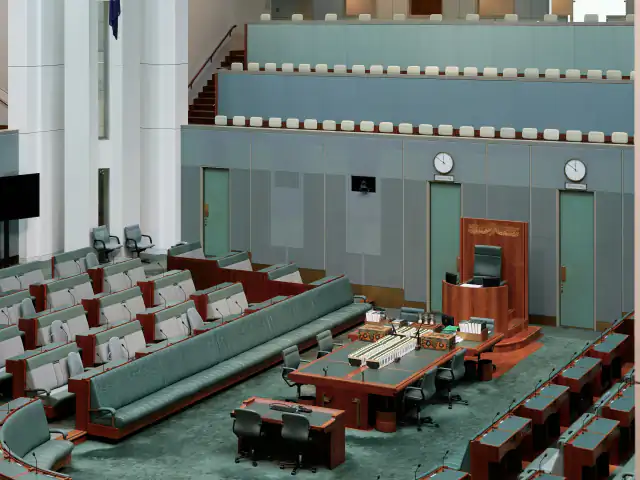
The House of Representatives
The House of Representatives is one of the Houses in the Australian Parliament. Other names for the House of Representatives are the Lower House or the People’s House.
Australia is divided into federal electorates. Members of Parliament (MPs) represent the people in their electorate. The number of MPs for each state and territory is based on the number of people in that state or territory. Overall, there are over 150 members elected to the House of Representatives.
Members of Parliament and senators debate proposals for new laws in the Australian Parliament. The role of the House of Representatives is to consider, debate, and vote on proposals for new laws or changes to the laws, and discuss matters of national importance.
The Senate
The Senate is the other House in the Australian Parliament. The Senate is sometimes called the Upper House, the House of Review or the States’ House. Voters from each state also elect senators to represent them in the Senate.
All states are equally represented in the Senate regardless of their size or population. There is a total of 76 senators. Each state elects 12 senators, and the Australian Capital Territory and Northern Territory elect two senators each.
Senators also consider, debate and vote on new laws or changes to the laws, and discuss matters of national importance.
State and territory government
There are six states and two mainland territories in Australia. Each state government has its own parliament and constitution. State and territory governments are based in their capital cities. The leader of a state government is the Premier and the leader of a territory government is the Chief Minister.
State governments operate in a similar way to the Australian Government. In each state, a Governor represents the King of Australia. In the Northern Territory, an Administrator is appointed by the Governor-General. The role and responsibilities of the Administrator are similar to those of a state Governor.
States have rights recognised by the Constitution while territories do not. States have the power to pass laws in their own right while self-governing territory laws can be altered or revoked by the Australian Government at any time.
In state and territory elections, Australian citizens vote to elect a representative for their area. These representatives become members of the relevant state or territory parliament.
Local government
The states and the Northern Territory are divided into local government areas which may be called cities, shires, towns or municipalities. Each area has its own local council. Councils are responsible for planning and delivering services to their local community. Citizens in each local government area vote to elect their local councillors.
What do the three levels of government do?
The main difference between the three levels of government is that, although some responsibilities may overlap, generally each level of government provides different services.
The Australian Government is responsible for:
- taxation
- national economic management
- immigration and citizenship
- employment assistance
- postal services and the communications network
- social security (pensions and family support)
- defence
- trade and commerce
- airports and air safety
- foreign affairs (relations with other countries).
State and territory governments are primarily responsible for:
- hospitals and health services
- schools
- roads and railways
- forestry
- police and ambulance services
- public transport.
Local governments (and the Australian Capital Territory Government) are responsible for:
- street signs, traffic controls
- local roads, footpaths, bridges
- drains
- parks, playgrounds, swimming pools, sports grounds
- camping grounds and caravan parks
- food and meat inspection
- noise and animal control
- rubbish collection
- local libraries, halls and community centres
- certain child-care and aged-care issues
- building permits
- social planning
- local environmental issues.